- The Commission
- Posts
- Issue #44: The hardest places aren’t hard for him 🌏
Issue #44: The hardest places aren’t hard for him 🌏
Bhutan, Nepal, and India remind us that no place is beyond God’s reach.
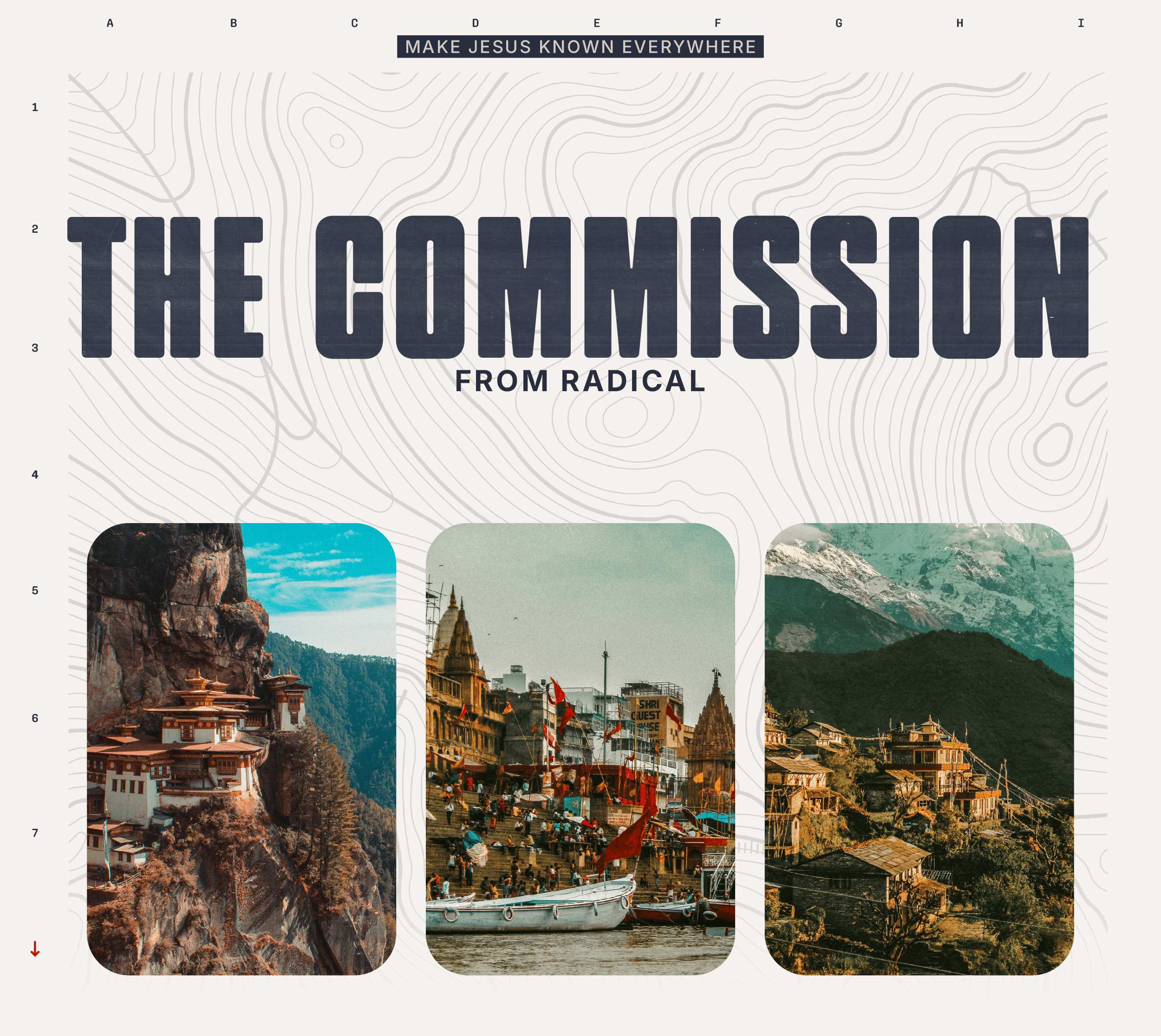
Hello friend. Some places feel far—not just from us, but from the gospel itself.
Mountain villages, crowded nations, hidden valleys where the name of Jesus is still rarely heard, if at all. But distance has never limited God.
He is not absent from the places that seem hardest to reach. He isn’t stopped by resistance, isolation, or slow progress. He keeps drawing people to himself—often quietly, often patiently, often through ordinary believers who trust him one step at a time.
In today’s edition:
🇧🇹 Why the gospel in Bhutan moves quietly through mountains, homes, and hidden faithfulness.
🇳🇵 What Nepal reveals about the real cost of reaching people shaped by spiritual blending.
🇮🇳 How patient, local faithfulness is carrying the gospel into the crowded complexity of India.
Where the Gospel Quietly Climbs 🇧🇹
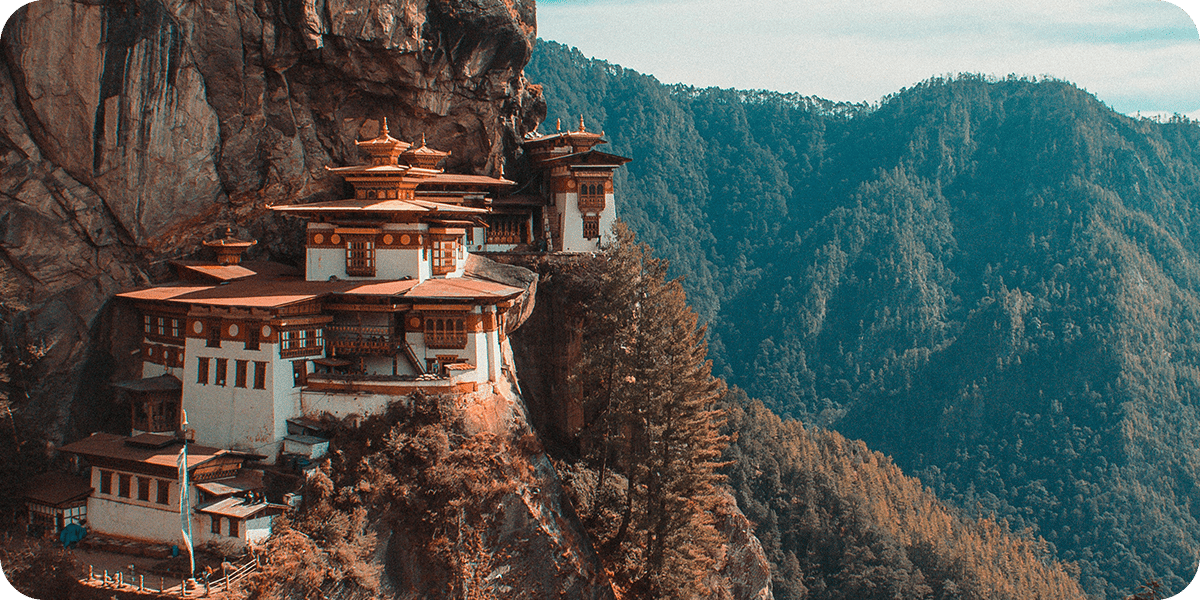
Bhutan is a small Himalayan kingdom where Buddhism shapes nearly every part of public life. Though the country is known for peace and beauty, following Jesus can still carry a quiet cost.
Christian groups are not freely recognized, public worship is heavily restricted, and converts from Buddhism are often viewed with suspicion by their families and communities. In many places, faith stays personal, discreet, and carefully guarded.
And yet the gospel has not stopped in Bhutan.
It moves slowly, often through relationships instead of platforms, through whispered discipleship instead of public ministry, and through believers who keep meeting, praying, and sharing Jesus in hidden ways.
For many Bhutanese, access to the gospel is still painfully limited.
There are villages where no church exists, valleys where few believers are known, and mountain communities where the name of Jesus is rarely heard, if at all. Whole people groups still live without a local witness, without Scripture in hand, and without anyone nearby to tell them who Christ is. Even there, he is not absent.
How to Pray:
🙏🏼 Pray for Bhutanese Christians to stand firm under pressure and know they are not alone.
🙏🏼 Pray for the gospel to take root in remote mountain communities where Jesus is still barely known.
🙏🏼 Pray for households across Bhutan to be transformed by the hope of Christ and become lights in hidden places.
Why Nepal’s Spiritual World Won’t Fit in a Pie Chart 🇳🇵
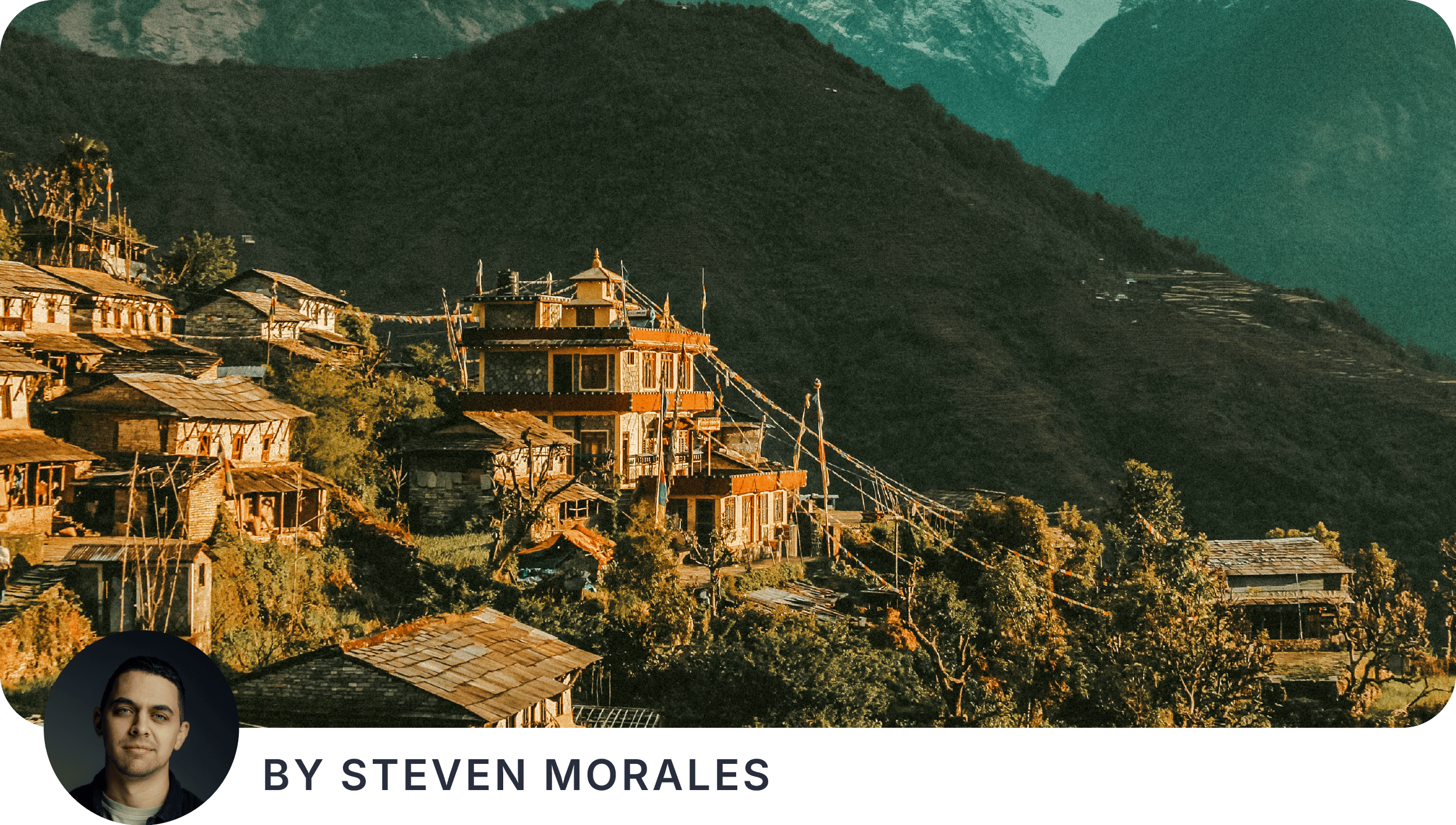
If you asked most people what religion looks like in Nepal, they'd probably say Hindu. And they'd be mostly right.
81% of the country identifies that way.
Another 8% call themselves Buddhist.
Clean numbers. Neat categories.
But spend any real time there, and you'll realize the pie chart lies.
Hindu tradition in Nepal runs deep—over two millennia. Indo-Aryan migrants brought Vedic rituals and ideas about karma and rebirth that fused with tribal and animist traditions already rooted in the land. Nepal would eventually become the world's only officially Hindu state, a distinction it held until 2008.
But when the monarchy fell and the country declared itself secular, it didn't push religion out. It made room for all of it.
That complexity hit me hardest in Lumbini—the birthplace of Siddhartha Gautama (A.K.A. Buddha).
Standing at the ruins of the palace where his father once tried to shield him from suffering, I kept thinking about what broke that open: an old man, a sick man, a corpse, and a wandering ascetic who somehow looked at peace.
Four sights. A whole life unraveled.
Siddhartha rejected both indulgence and extremism, sat beneath a fig tree, and—Buddhist tradition says—woke up. Liberation through ethical living and meditation, not ritual or the accident of your birth.
A direct challenge to the religious world around him. Except Buddhism wasn't born outside that world. It grew from inside it.
So what does this mean?
Well, here's the simplest way I can put it: in Nepal, religion doesn't work like a multiple-choice question. Most people in the West grow up assuming you pick one — you're Christian, or you're Jewish, or you're Muslim.
But in Nepal, the dominant traditions don't demand that kind of exclusivity.
Hinduism, at its core, is remarkably open—it tends to see different gods, teachers, and spiritual paths as different expressions of the same ultimate reality.
So when Buddhism arrived, rather than replacing Hinduism, it got absorbed into it.
The same sacred figure might be worshipped as a Buddhist symbol of compassion in one temple and a Hindu deity in another—and many Nepalis wouldn't see a contradiction there at all. You can light incense at a Buddhist shrine in the morning and make offerings at a Hindu temple in the afternoon, and nobody blinks.
That's syncretism: not a blending born out of confusion, but one built over centuries of two traditions living inside each other.
What you believe in Nepal, and how you practice it, depends entirely on who you ask. Not contradiction—layering. A religious world that has spent thousands of years absorbing and refusing to stay in clean categories.
Which raises a harder question I kept coming back to the whole time I was there: What does it actually cost to bring the gospel to people whose entire spiritual world is built on blending?
That's what we spent weeks trying to understand.
Next Saturday, we're releasing Hard to Reach: Nepal on our YouTube channel—an honest look at the spiritual landscape of this country, and the real cost of reaching its people with the gospel. We hope you'll watch.
—Steven Morales
P. S.: If you want to watch it sooner, join us for Secret Church on April 17. We’re doing an exclusive premiere for Secret Church attendees. Remember to use code COMMISSION for 20% OFF your registration 😉
Clarity and Courage in a Crowded Land 🇮🇳
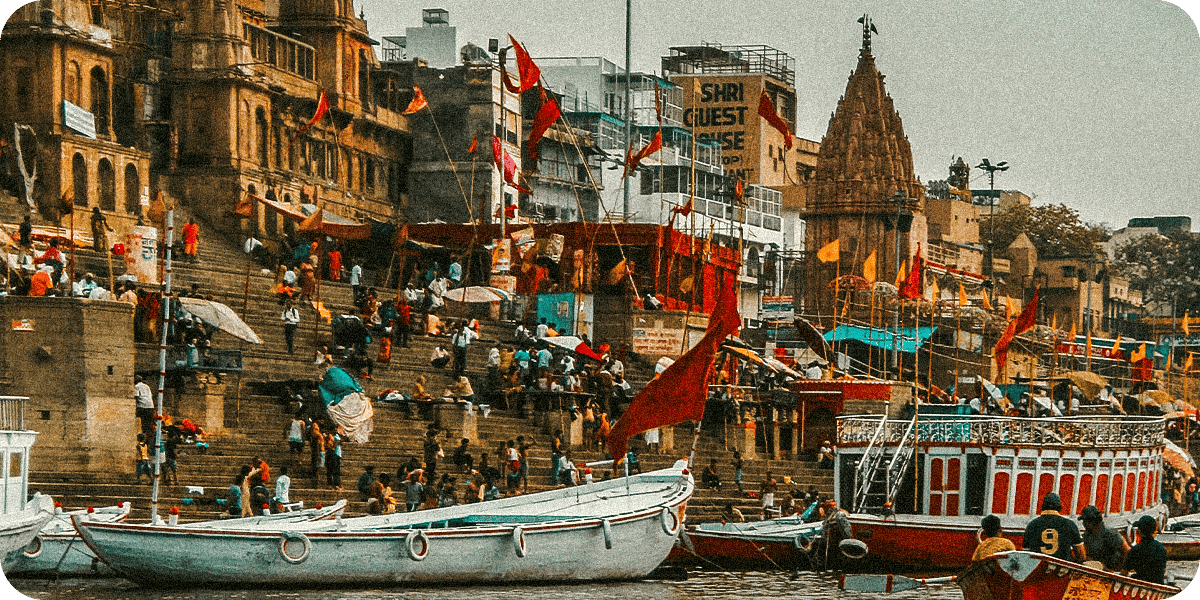
India’s gospel story stretches back centuries, possibly even to the apostle Thomas or the generations soon after him. Yet today, Christians make up only about 2.3% of the population in the world’s most populous country, and vast numbers still live with little or no clear access to the gospel.
Hindu nationalism is growing, anti-conversion laws in multiple states make open witness and baptism increasingly difficult, and many new believers face real pressure from both the government and their own communities. In some places, churches can gather openly; in others, house churches are shut down and preachers are jailed.
And still, God is at work.
In rural India, Radical is helping a local church share the gospel with tribal communities—equipping church leaders, translating ministry resources into the regional language, and helping send workers into places where Christ is still barely known. It’s quiet, patient, deeply local work. But in a country where so many have never heard the gospel clearly, that kind of faithfulness matters.
How to Pray:
🙏🏼 Pray for protection and perseverance for Indian believers as opposition grows.
🙏🏼 Pray for new converts to find strong Christian communities and be encouraged in their faith.
🙏🏼 Pray for the gospel to spread with clarity and courage among unreached peoples across India.
Did you pray for this country today? |
📍 Attention Worthy
Secret Church is only a week away. Use code COMMISSION to get 20% OFF on registration (including group packs!). Join us April 17 at 6 PM (EDT)!
Religious diversity doesn't disprove Christianity. Gavin Ortlund explains why—and how believers can confidently affirm Jesus while engaging others with humility.
What does faithful witness look like in a world that no longer feels remotely Christian? The church’s witness is bigger than scattered ministry activities—it’s part of who the church is.
Missions strategies matter, but they can’t substitute the One who gives growth. When the soil is hard and progress feels slow, remember to trust the One whose power, not our methods, advances the gospel.
